In today’s world, one of the few sectors which cloud computing has not penetrated on a large scale is in industrial plants. Many companies are still wary of a remote platform which operates from outside their facilities, despite its undeniable success in other economic sectors and the tremendous advantages it offers.
Editorial of Juan José Colás, Chief Sales and Marketing Officer
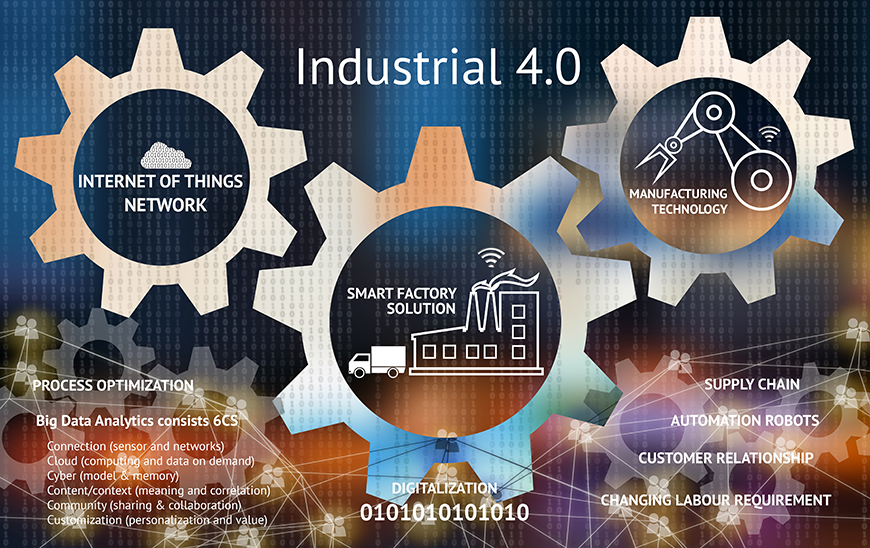
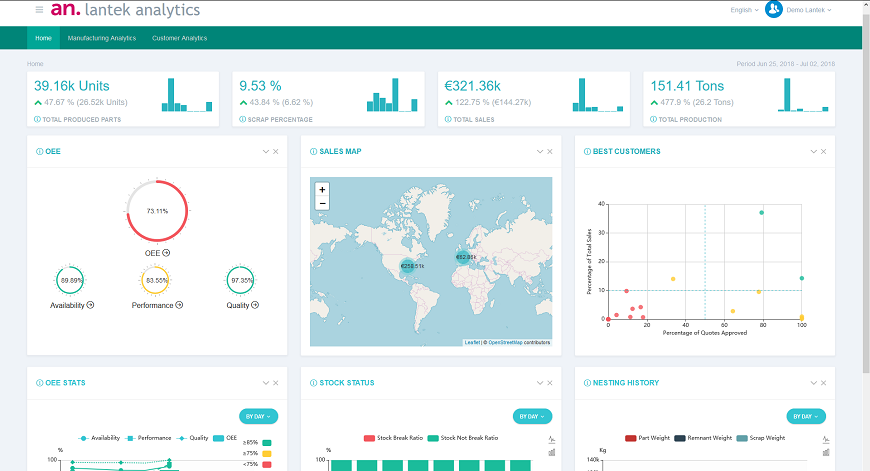
Of course, the Digital Transformation of industrial companies is changing this dynamic, because data capture devices and software tools are becoming more interconnected. The need for computers to relate and obtain valuable information that facilitates decision making is increasing every day, and access to this information is no longer reduced to a personal computer in an office, but to multiple devices.
In this context, companies are turning to cloud computing because of all the advantages it offers: an immediate increase in computing capacity, no hardware or software obsolescence, no need for investment in fixed assets, no costs of excess capacity, no need to increase the number of specialized technicians, and the peace of mind offered by advances in security and multi-location which ensure that corporate data is more secure than on a company’s own servers, among other benefits.
All these points are essential competitive advantages in a hypercompetitive world. Therefore, the most important cloud platforms (Azure by Microsoft, AWS by Amazon and Cloud Platform by Google) are growing exponentially and many industrial companies are going to take this step in the coming years.
Digital competitiveness will be the fundamental factor in the survival of many companies. Welcome to the new reality.
Automated Machine Learning (AutoML) has become a trending topic in the industry due to the implementation of numerous algorithms by groups dedicated to academic research on artificial intelligence (AI) in recent years. AutoML is a tool for streamlining the development of AI solutions in the industry by providing explainable and reproducible results in an automatic and simple way.
We are quite often faced with a recurring question from our clients, companies that have made the complicated decision to buy a laser cutting machine but have no clear criterion or contrast data to help them find out which is the right machine for them.
If we look back in time, we will see that the machines of the future will follow the same paradigm as previous industrial revolutions, producing more at a lower cost.