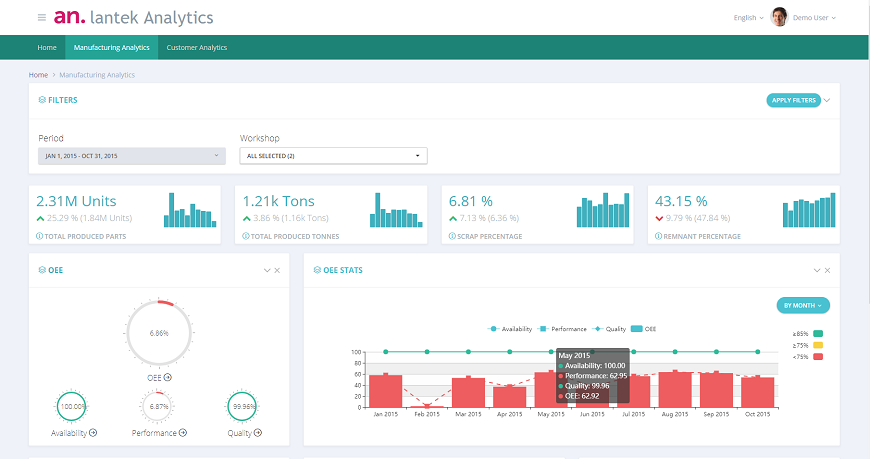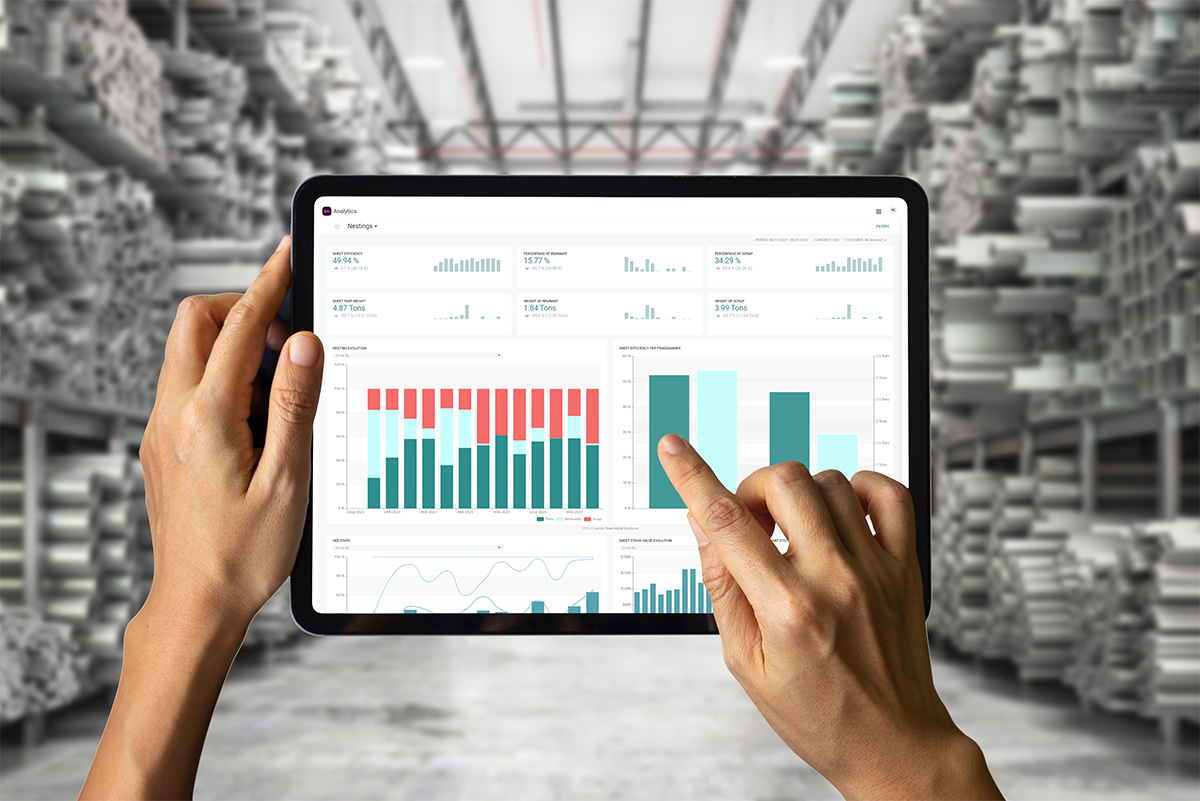
The industry has fully recognized the importance of artificial intelligence (AI) for its advancement. As previously mentioned, integrating AI-based analytical tools allows companies to maximize the information generated by their operations, turning it into a key resource for decision-making. Intelligent solutions help businesses better tackle challenges such as workload overload, inventory fluctuations, machine failures, and other unforeseen events that can impact production. Automated and dynamic plant planning, once unimaginable, is now a reality.
Despite these advancements, many companies still face challenges in sharing the vast amounts of data they generate. In many cases, legal barriers prevent smooth information exchange between different entities. This is where initiatives like the aiXia project, led by Lantek for the creation of federated AI services, become significant. This project involves companies from various sectors such as metal, travel, health, and software, aiming to develop an AI-driven infrastructure that facilitates the secure and legal exchange of data between organizations.
The aiXia proposal includes a next-generation, decentralized, and scalable architecture designed to provide access to critical data and optimize decision-making, thus reducing the time and effort required by teams. In a competitive industrial environment, it is crucial to move quickly to avoid losing ground. Artificial intelligence is no longer optional but a necessity, and companies must integrate it into their essential processes as soon as possible to remain competitive.