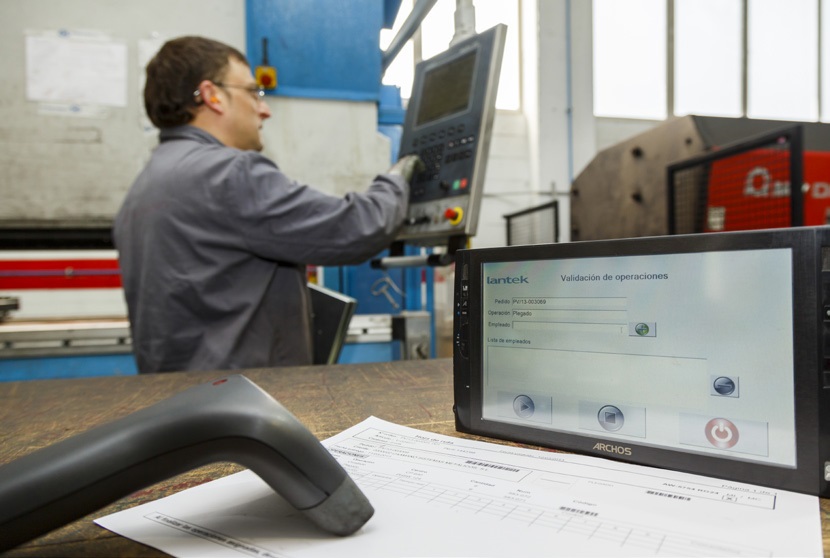
Although Lantek Inside is not a new product, Lantek has been working on it for over 4 years and offers machinery manufacturers a software solution to include in their controls, with significant advantages, among which are the ability to edit machined parts right at the machine, generate newly machined parts, add or remove parts, etc. This gives the end operator more versatility to maximize the use of the materials and execution times, thus reducing the response time, because changes can be made at the machine without having to go back to the office to make these adjustments. Apart from reducing the generation of unnecessary documentation, since all the information about the machined parts is in the software, we can forget printing the trays. The direct connection between the office software and the plant software allows the operators to have the information on the work to perform as soon as the work is generated.
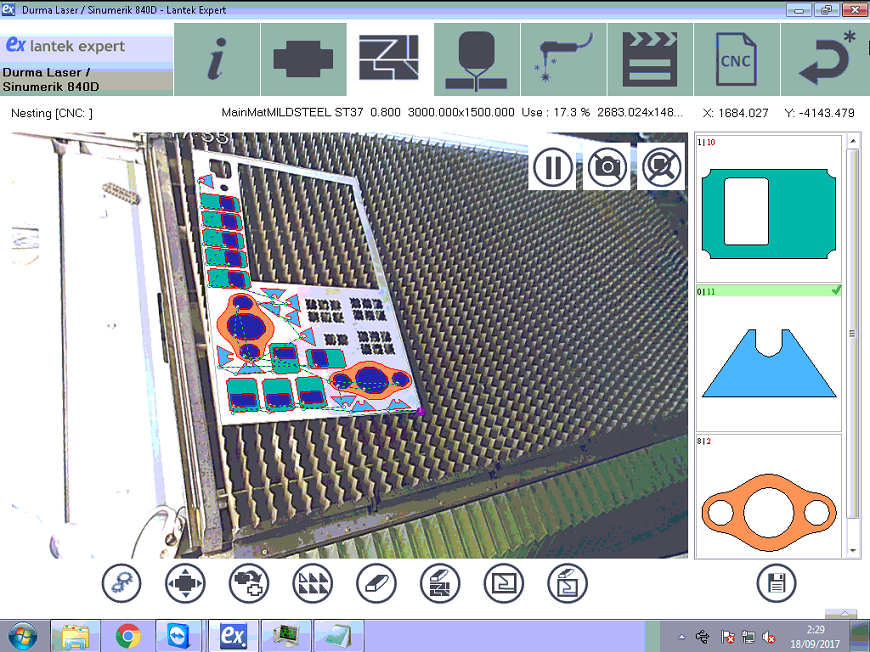
As if all of these advantages were not enough, Lantek has gone one step further in the development of new technologies, adding “Touch & Play” functionality to this versatile product. With “Touch&Play,” reusing leftover parts with complex geometries, something usually complicated, becomes trivial thanks to the new augmented reality system.
A camera installed in the machine will show a live image of the leftover part to use; and, by means of an intuitive interface, the desired parts may be positioned on the sheet. The system shows the parts virtually positioned on the actual sheet, which allows the operator to avoid holes or damaged areas.
The system provides the option to import parts from previous machining processes, optimizing the user’s response to the usual production needs to redo damaged or lost parts by using any previously generated small leftover pieces without intermediate procedures, such as sheet alignment and measuring, thus significantly streamlining production processes.
Thanks to this new functionality, Lantek Inside has become a powerful ally to reduce costs and improve efficiency. Lantek has positioned itself once again as a spearhead in global technological innovation.