This solution allows the incorporation of information from ERP or MRP such as order orders or manufacturing orders, and from there to manage the manufacturing operations on each machine giving greater flexibility, speed and efficiency to the process. All of this works by integrating completely with the rest of the areas and business processes, from the design modules (CAD) to machining (CAM) and giving feedback to the business management system (ERP).
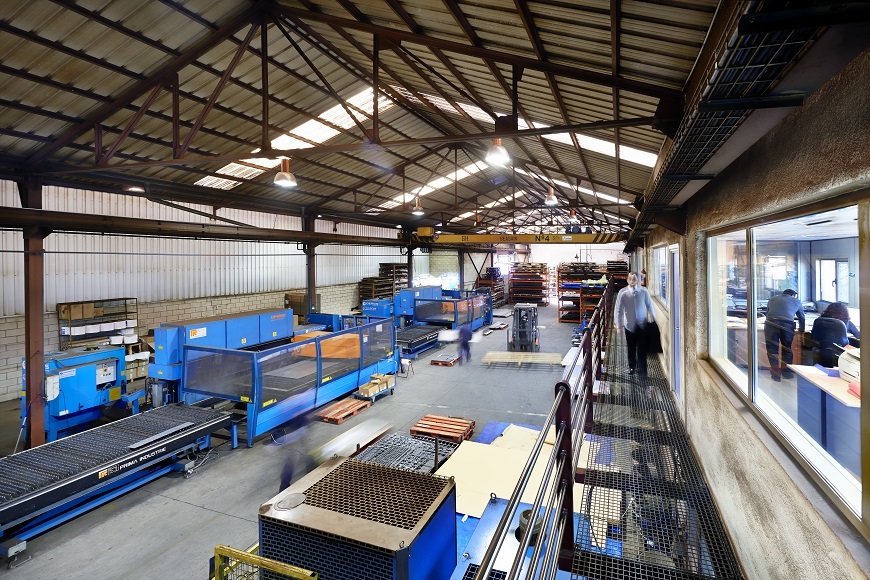
As a result, the productivity of the factory increases significantly, with cost optimisation, and makes the advance management of the manufacture in companies that produce pieces in sheet metal, tubes and profiles, maintaining real-time control of all the different activities that occur in the plant, and making it possible to cover all current and future needs of the management company in each of its areas, from the initial customer acquisition process to the final support service.
It consists of four complementary functional areas:
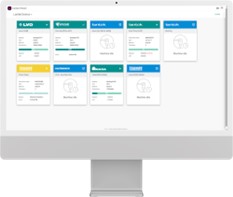
Lantek MES Manager (Production Management):Software for automatic management of manufacturing processes from start to finish, with which the user can track the state of the pieces in real time according to different criteria such as machine, phase, material, thickness, delivery date, etc. For example, the workload of the machines necessary to optimise production can be taken into account, reallocating and modifying requests to make a more optimal use of resources, or perform a comparative analysis of costs to avoid deviations.
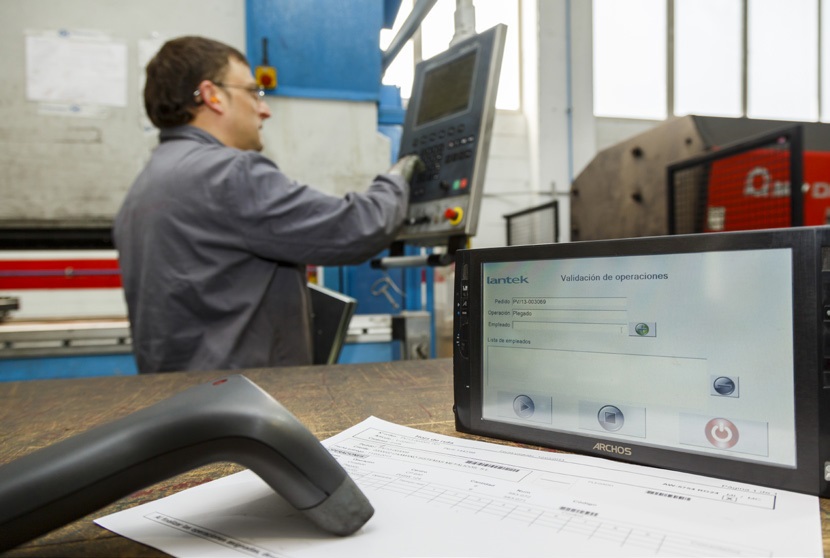
Lantek MES Wos (Data validation): Using intuitive screens, users can obtain an efficient solution to collect all the manufacturing data (operators, materials, inventory, availability of machines, etc.) in real time, eliminating administrative tasks that slow down processes and may be subject to error. The objective is to optimise production in the machine where the work is performed, controlling the activity of the machine itself, as well as the consumption of material and human resources.
Lantek MES Capture (Mobility): A data capture system integrated with MES systems that makes it possible to manage and control each process from anywhere in real time. With this tool, the operator can instantly identify possible deviations and correct them, as well as record the hours of entry and exit of employees, hours of dedication to each task, something very appropriate for companies with employees on the move, and something very appropriate for companies with employees in continuous movement, after the recent entry into force of Royal Decree-Law 8/2019 regarding time records.
Lantek MES Inventory (Inventory Management): This solution makes it possible to determine actual inventory, whether it is in production, in stock or on request. With this system, achieving significant savings in the consumption of the sheets and scraps becomes a reality. By being connected to Lantek Integra, the system automatically updates the actual cost of the products. In addition, its integration with barcode or QR readers speeds up the identification and entry/reading of data. It is an effective program for the control of the historical and to carry out an extensive analysis of the inventory.
In short, among the many benefits that Lantek MES brings, the following are important to highlight:
In this way, with Lantek MES, the user can easily control the execution of his production processes in a simple way with one fast, flexible and easy-to-use tool with which companies can gain competitiveness and thus achieve profitability.