In recent years we have talked a lot about how technology and digital transformation have become an unstoppable
reality and how this is impacting business and industrial processes.
Article by Alberto Martínez, CEO of Lantek
We are facing the paradigm of Industry 4.0, which poses a new industrial revolution. As in previous revolutions, digital transformation will also mean an increase in productivity and therefore improved competitiveness. Here at Lantek, we believe that this digital transformation should not be understood as an end in itself; but rather as a means of enabling the design of a new model of industrial management that is more deeply rooted in knowledge.
The digital transformation process of a traditional company involves a process of connectivity between value chains, through technologies applied in the analysis of descriptive and predictive data. This allows us to have a better
understanding of all processes in the supply chain for decision-making and production optimization.
The transformation is key because it represents a break with the previous production management model and will initially only be taken up by industry leaders. Given this scenario, Lantek has set itself the goal to raise awareness within the business community of the need for change and to become a benchmark in Industry 4.0 through a model of comprehensive transformation. This transformation will allow us to adapt to all stages of the maturity of our customers and is also compatible with traditional models. We will do this under our premise: “Think Globally, act Locally.”
At Lantek we strongly believe that we can lead this paradigm shift because we have the technology and the knowledge; and, we believe that this is the path that will allow us to reinvent the factory of the future.
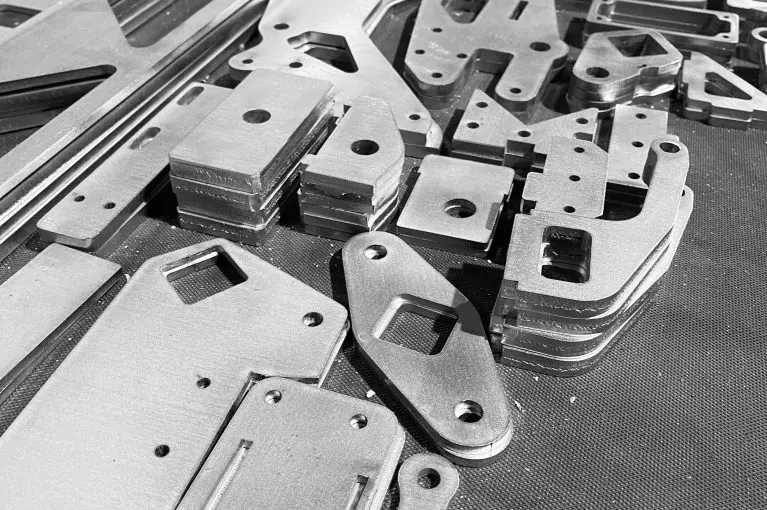
Cutting and bending sheet metal accurately is a challenging task, especially when the job involves tight tolerances and complex geometries. It often takes time, skill, and multiple tries to meet customer specifications.
Material waste and a lack of agility in nesting or the nesting of parts are two of the most common problems faced by metal processing companies which slow down the company’s response time for its clients and make the process more expensive. This is due to them not using the appropriate technology in order to fully exploit each piece of sheet metal during the cutting process and/or the fact that this process is completed manually or using slower solutions. Equally, the work of the production engineer mustn’t be knocked as they are experts in the optimization of nesting and machining; the maximization of the margin for each production order received depends on their intervention.