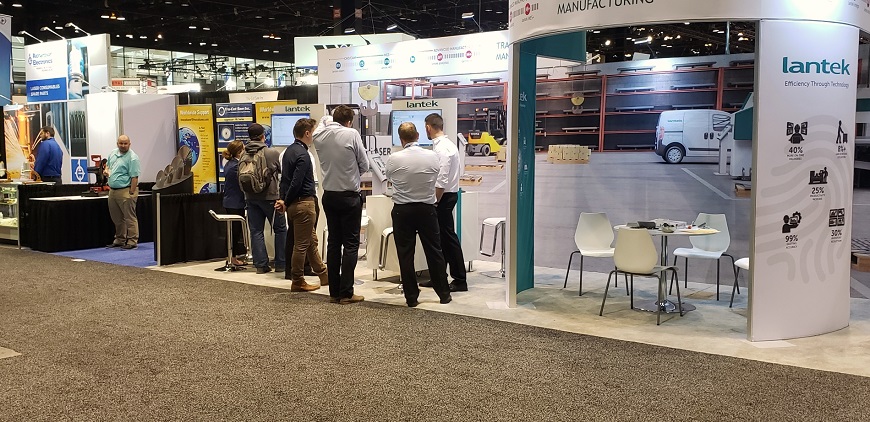
Lantek demonstrates their advanced manufacturing solutions for sheet metal, tube, pipe, and structural steel manufacturers.
FABTECH is the marquee event of the year for our Lantek USA office and this year surely did not disappoint. While some weather may have affected travel plans for many, we believe the show was a great success in highlighting the latest manufacturing advancements. Here are some highlights and take-aways from the show, from the Lantek USA perspective:
Technology is taking over
Okay, this sounds a bit intimidating. We are just glad to see that technology, including software systems such as ours, are being showcased in lieu of the incredible machines we operate. Technology improving our daily lives is inevitable, now it’s time to focus those improvements to the shop floor and increase your in-shop livelihood.
Business automation and intelligence are front of mind
Shop floor automation has been the buzz for a while now, but how can we begin automating the sales process? With Industry 4.0 at its’ height, this has recently become a major topic in the industry. Knowing early on that machine automation and connected devices would become commonplace, Lantek began developing solutions decades ago to aid in automated, accurate quotes. Finally, more systems are becoming connected and deeper analyses of machine metrics and historical sales is making this automation a reality.
Collaboration is key
For many businesses to succeed in our hyper-connected world it is becoming more necessary to collaborate. Sometimes this may mean working with a competitor to ensure your customer has the best quality product at the most reasonable price. Aside from this, it is imperative for machine builders, machine control, and manufacturing technology companies to partner for added customer satisfaction and integration with all aspects of the business.
Skills gap remains a hot topic
As older workers continue to retire at staggering rates manufacturers are scrambling to keep up with employment needs. We have begun to see a shift in the mindset of training the next generation’s workforce, however it is crucial to keep technology in mind when doing so. If your facility is operating with antiquated systems, it will be difficult to attract and retain talent that is used to today’s technology. That said, technology can alleviate the burden of a limited workforce through automation of tasks from the shop floor to the business office.
Putting faces to names
With clients distributed around the world it makes it difficult to personally meet them. FABTECH gives our clients and experts the opportunity to meet the person they have spent time implementing and maintaining our systems with. This is great in building and maintaining relationships with all our fascinating clients around the country and world.
Record breaking number of speaking sessions
Lantek is proud and honored to have been selected for a record number of speaking sessions at this years’ FABTECH. Show organizers accepted six (SIX!) Lantek abstracts focused on manufacturing technology, engaging younger generations, and market indicators to prepare for future manufacturing revolutions. If you are interested in learning more about our abstracts feel free to send us a message.
As always, we are extremely excited about the success of this show and look forward to continued conversations with those who stopped by our booth. If you didn’t have time to talk with us, your plans were affected by the weather, or you would like to add to our list of FABTECH highlights, feel free to contact us.
Finish the year strong, enjoy the holiday season, and we will see you all at FABTECH 2020 in Las Vegas – or maybe sooner!
About Lantek
Lantek is a multinational which is leading the digital transformation of companies in the sheet metal and metal industry. With its patented smart manufacturing software, it enables factories to be connected, turning them into Smart Factories. It rounds off its range of services with CAD, CAM, MES, and ERP solutions for companies that manufacture metal parts from sheet metal, tubes and profiles using any cutting technology (laser, plasma, oxycut, waterjet, shearing, and punching).
Founded in 1986 in the Basque Country (Spain), one of the main European hubs of machine tool development, Lantek enables the integration of sheet metal and metal processing technologies using the most advanced manufacturing management software. The company is currently the outstanding leader in its sector thanks to its capacity for innovation and commitment to internationalization. With more than 23,000 customers in over 100 countries and 20 offices in 14 countries, it has an extensive network of distributors with an international presence. In 2018, its international business contributed to 86% of its revenue.
For more information, visit: www.lantek.com/us