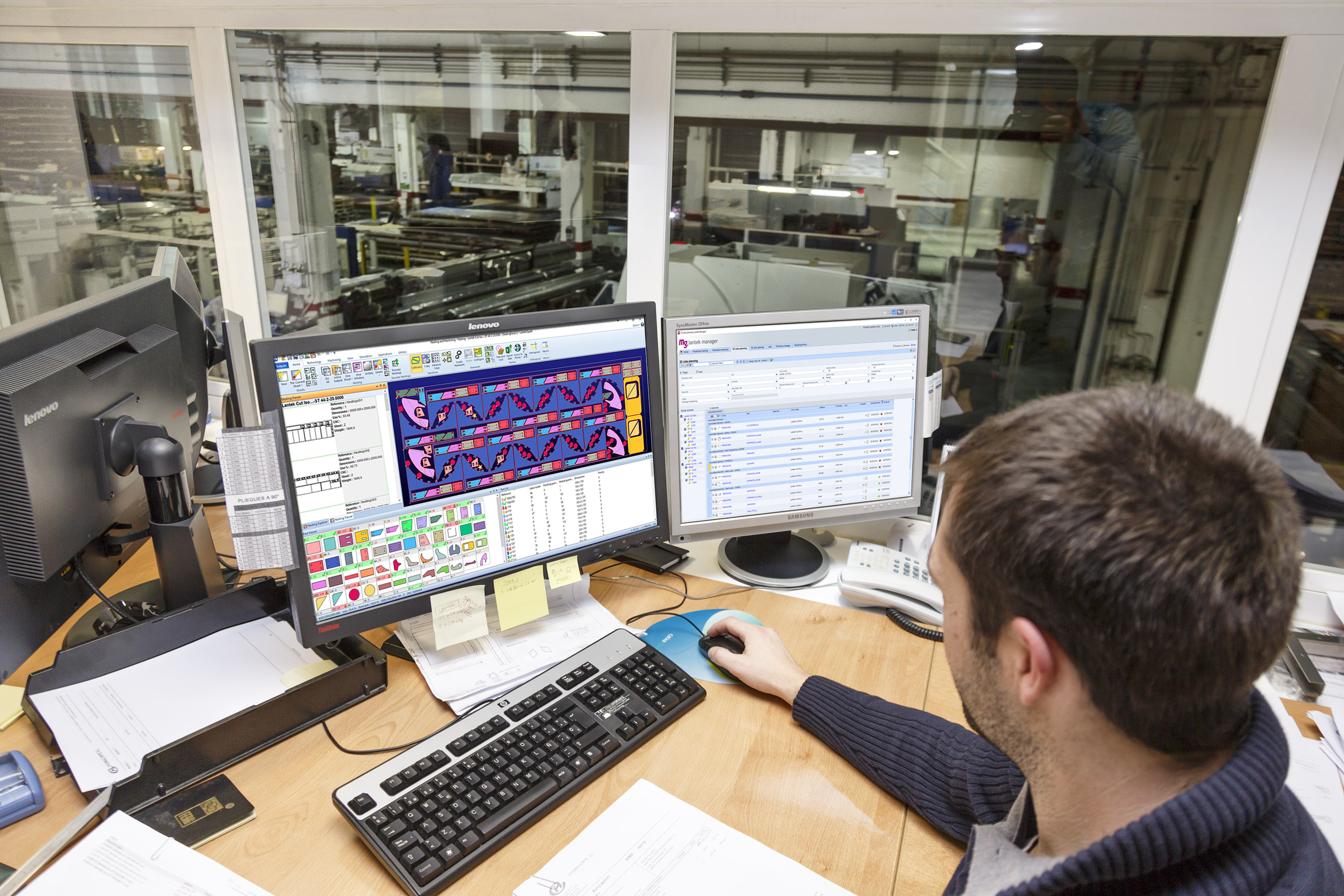
For this to be possible, the data must not only flow through the factory but also within the cloud and that means we need software that is capable of securely connecting the factory. Sherlock Edge is the new Lantek software aimed at doing exactly that. In this sense, Sherlock Edge is a set of services that will be deployed in the factory to provide real-time communication with the cloud as well as edge computing capabilities. This will allow for preprocessing of the data before sending it to the Lantek cloud (our Lantek 360 platform), as well as increased privacy and security for our customers with faster, more efficient uploads.
One of the powerful built-in features in Sherlock is the over-the-air (OTA) updates. OTA will allow Sherlock to be updated without human intervention with the latest security patches and, at the customer’s request, new features that extend its capabilities.
Sherlock Edge will make its debut in the v2020 SP1 release of the Lantek software. Initially, it will have the OTA feature and a module to be used to upload the data required by Lantek Analytics to work. Both will be disabled by default but can be enabled at the customer’s request. In the future, new features will be added using OTA such as a machine connectivity module that will allow connections to several models of cutting machines and upload real-time data related to their status. OTA will progressively increase the number of models of machines supported, opening the door to continuously improve the software Lantek provides to its customers.
Sherlock Edge is a milestone in the data and cloud strategy of Lantek that paves the way for future innovations and advanced services for Lantek customers.